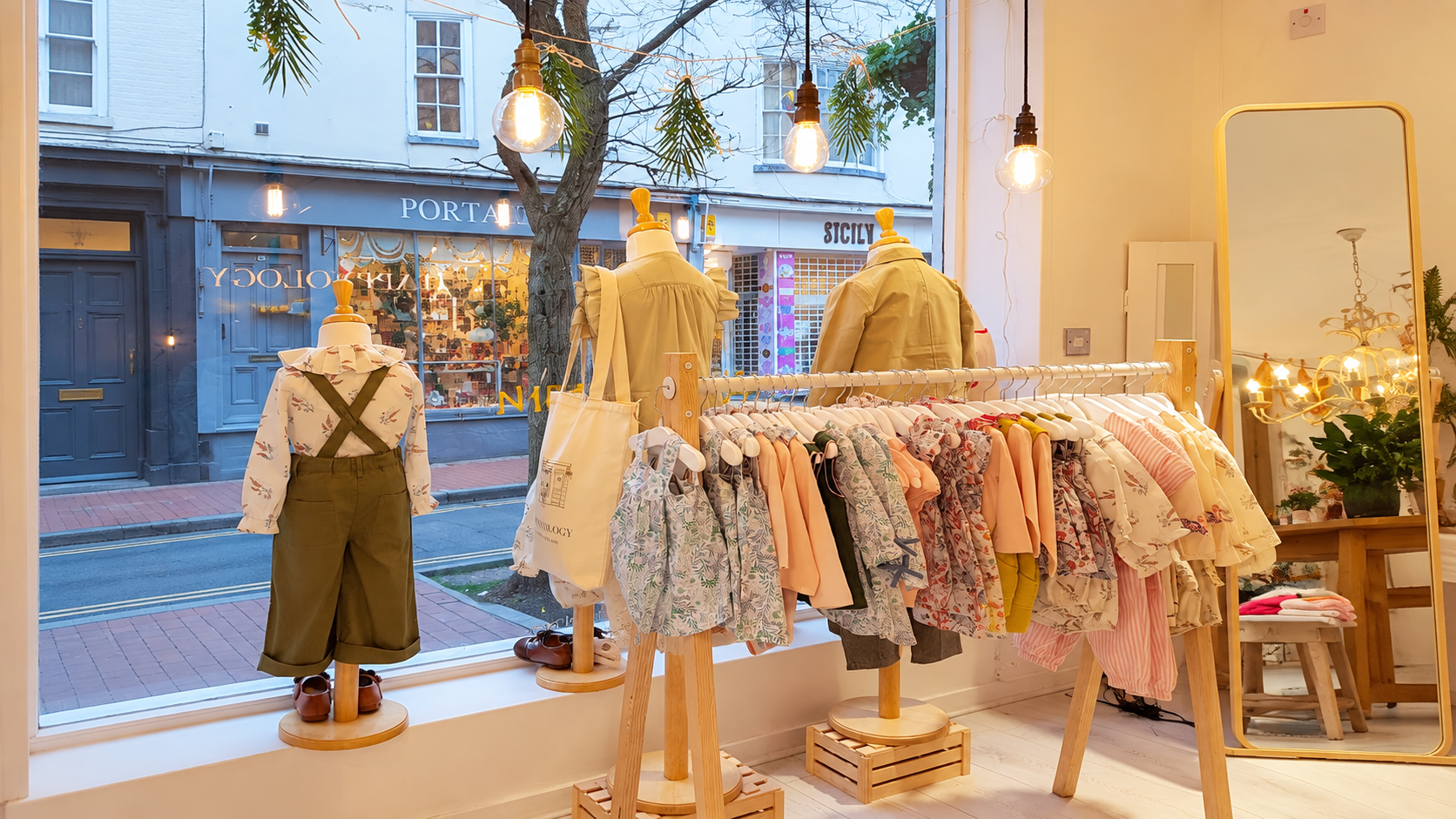
A matching set makes one outfit easy to understand. A well-planned kidswear capsule goes further: the same top works with several bottoms, a layer connects the colour story, and a new print refreshes the range without requiring every silhouette to change. For buyers developing private label kids clothing, the opportunity is to design those relationships before placing individual styles on an order sheet.
This is a collection-planning approach, not a promise of higher sales. Its value depends on the actual combinations, price architecture and stock available in the sizes customers need.
The retail reference: sell a coordinated look
Next’s children’s co-ords presentation brings together T-shirt-and-shorts combinations, sweat sets, prints and block colours. The useful observation for a buying team is how complete looks are presented to customers. The page does not reveal sales performance or prove that every component is interchangeable.
For an original private label collection, take the merchandising principle: make the relationship between pieces easy to see. Develop your own artwork, palette and silhouettes, then decide which combinations genuinely work as outfits.
Start with an outfit map, not another colourway
Consider a hypothetical six-style capsule: two T-shirts, a shirt, two bottoms and a light layer. Three tops multiplied by two bottoms creates six possible top-and-bottom combinations on paper. That does not mean there are six good outfits, six extra products or six guaranteed sales.
Review each pairing for proportion, colour balance, fabric weight and intended occasion. A long oversized top may hide the defining detail of one bottom. A large print can compete with another focal point. A layer may work visually but feel too heavy for the intended season.
Mark the combinations you would actually photograph and merchandise. If a style only works with one other piece, decide whether it earns its place as a deliberate statement outfit or should be redesigned to connect with more of the range.
Give each style a commercial role
The anchor: a relatively versatile piece that connects several looks. Its job is not necessarily to be the cheapest item; it needs a useful shape, colour and material for the collection.
The statement: the print, silhouette or detail that gives the range an identity. Limit the number of competing focal points so that the assortment still reads as a collection.
The connector: a layer or secondary piece that carries a colour or detail across different outfits. It should create a meaningful additional combination rather than repeat a garment already doing the same job.
These are planning roles, not fixed product categories. Ask the design and buying teams to explain what each proposed style adds before increasing the assortment.
Shared colours do not automatically mean shared fabric
A coordinated T-shirt and woven short may use the same colour reference but still require separate material sourcing and approvals. Even two knit garments may need different weights or finishes. Visual coordination and production consolidation are separate decisions.
Ask your kidswear manufacturer which styles can genuinely share the same fabric specification, colour and finishing route. Where sharing is practical, compare the combined material requirement. Where it is not, retain separate approvals and cost assumptions. Our guide to colour matching coordinated sets explains why components should also be assessed together.
Do not force one fabric into every garment merely to simplify the order. The saving may be unattractive if the shirt loses structure or the bottom no longer has the intended appearance.
Count style-colour-size variants before calling the range small
In an illustrative plan, six styles offered in two colours and five sizes create 60 style-colour-size variants. Offering the same six styles in four colours creates 120. Neither calculation establishes a factory minimum, but it exposes how quickly an apparently compact range can fragment.
Adding another colour can therefore require more buying depth and planning than the mood board suggests. Compare a new colour with a new combination made from existing pieces before expanding the range. Use a style, colour and size MOQ breakdown to identify which material or component commitments actually change.
Decide whether you are selling sets or separates
A fixed two-piece set and two separately sold garments need different ordering and packing instructions. With sets, define how the pieces are paired by size and whether the price includes the full retail unit. With separates, give each item its own quantity and size curve.
The distinction also affects repeat orders. If a top sells faster than its matching bottom, ask whether the top can be repeated independently and which material commitments apply. A launch price based on balanced sets may not carry over to an uneven reorder.
When comparing kids clothing sets manufacturers, send the same selling model to each supplier. Otherwise, apparently similar quotations may cover different products and packing work.
Review one complete capsule before expanding it
Approve representative garments together so that the team can assess the outfit map in physical form. Check proportions across the agreed size range, colour relationships and how the pieces look after the agreed care process. A row of individually attractive samples can still fail as a coordinated collection.
Then ask for two clearly separated quotation scenarios: the proposed capsule and a defined alternative using fewer colours, shared materials or simpler details. Keep the design changes explicit. This makes the cost comparison useful without assuming that a smaller assortment must always be cheaper.
Turn the collection plan into an OEM/ODM brief
For a discussion with QH Apparel’s kidswear OEM/ODM team, bring the outfit map, each style’s role, fabric direction, colourways, size breakdown and intended selling format. Identify the combinations that must remain intact if the range is revised.
Explore the QH Apparel product collection for category references, then discuss your private label kidswear capsule. The aim is a coherent range in which every style has a reason to be bought, developed and produced.
Ready to move from assortment planning to supplier discussions? Review QH Apparel’s private label kidswear manufacturing and project enquiry guide for development scope, quotation inputs and production decision points.